
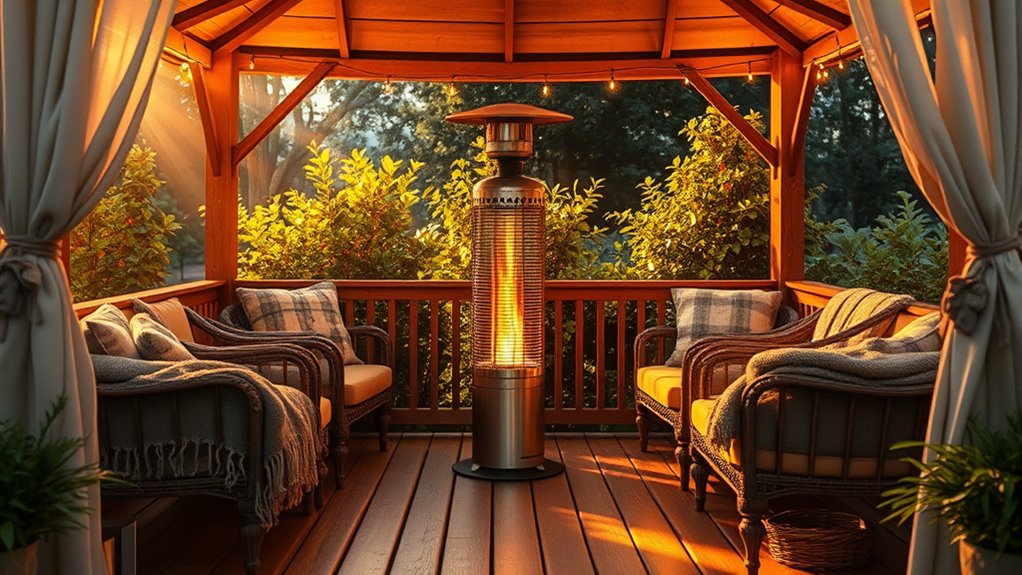
When it comes to safe heater placement in your gazebo, understanding the layout and choosing the right heater is essential. You’ll want to guarantee the heater is positioned centrally for even warmth while avoiding any flammable materials. However, there’s more to it than just placement. Knowing how to maintain proper ventilation and adhering to safety precautions can make a significant difference. Let’s explore the strategies to create a cozy yet secure environment.
Understanding Different Types of Heaters
When you’re considering heating options for your gazebo, it’s essential to understand the different types of heaters available. Electric heaters are convenient and easy to use, requiring just a power source. They provide consistent warmth without the hassle of refueling, making them ideal for smaller spaces. On the other hand, propane heaters offer more robust heat output and portability, perfect for larger areas or outdoor use. They run on propane tanks, giving you the freedom to move them around as needed. Each type has its benefits, so weigh your options carefully to find the best fit for your gazebo.
Assessing Your Gazebo Layout
As you begin to assess your gazebo layout, it’s important to take into account the space’s dimensions and configuration to guarantee ideal heater placement. Evaluate the gazebo dimensions—length, width, and height—to determine how much heat is needed. Heater capacity should match the area you want to warm effectively. Consider the furniture arrangement and any potential obstructions that could impede heat distribution. Think about how you’ll use the space, ensuring pathways remain clear for safety. By carefully analyzing these factors, you’ll create a comfortable environment where you can enjoy your gazebo year-round, free from discomfort.
Ensuring Adequate Ventilation
While ensuring your gazebo remains cozy, it is vital to prioritize adequate ventilation to prevent heat buildup and maintain air quality. Proper ventilation requirements must be met to allow for effective air circulation, promoting a comfortable environment. Consider incorporating vents or windows that can be opened, ensuring fresh air flows freely. This will help disperse excess humidity and maintain a pleasant atmosphere. If your heater produces emissions, enhanced ventilation becomes critical for safety. Always balance warmth with fresh air; this way, you can enjoy your gazebo without sacrificing comfort or health. Stay aware of your surroundings and adjust as needed.
Optimal Heater Placement Strategies
To create a comfortable atmosphere in your gazebo, placing the heater in the right location is crucial. Consider the following ideal strategies for effective heat distribution:
- Central Placement: Position your heater centrally for even warmth across the space.
- Heater Height: Mount the heater at an appropriate height to maximize heat flow without obstruction.
- Distance from Walls: Keep it a few feet away from walls to prevent heat loss and guarantee safety.
- Avoid Obstructions: Confirm furniture or decorations don’t block the heat source, allowing for better air circulation.
These strategies will help you enjoy your gazebo year-round.
Safety Precautions to Consider
Proper heater placement is just the beginning; guaranteeing safety in your gazebo is equally important. Always follow heater safety guidelines, keeping flammable materials at least three feet away from your heater. Regularly check for gas leaks if using a propane heater, and never leave it unattended while in use. Install smoke detectors and have a fire extinguisher handy to mitigate potential fire hazards. Be cautious of carbon monoxide buildup, especially in enclosed spaces. Finally, ascertain proper ventilation to maintain fresh air circulation. By taking these precautions, you can enjoy a warm, safe environment in your gazebo.
Maintenance Tips for Safe Heater Use
Regular maintenance is essential for safe heater use in your gazebo. By keeping your heater in top condition, you guarantee both safety and efficiency. Here are some key tips:
- Conduct safety inspections regularly; check for gas leaks or corrosion.
- Clean the heater to remove dust and debris that could obstruct airflow.
- Inspect the fuel supply and connections to avoid potential hazards.
- Store the heater properly during off-seasons to prevent damage.
Following these heater maintenance tips helps create a comfortable, safe environment in your gazebo, allowing you to enjoy your space without worry.
Frequently Asked Questions
Can I Use a Heater in a Canvas Gazebo?
You can use a heater in a canvas gazebo, but guarantee the heater type is compatible with canvas material safety. Always maintain proper distance and ventilation to prevent fire hazards and guarantee a safe environment.
What Power Source Do Gazebo Heaters Typically Require?
Imagine cozy warmth enveloping you—gazebo heaters typically require electricity for electric heater options or propane for various heater types. Choose wisely, and enjoy a comforting escape beneath the stars, even on chilly nights.
Are Outdoor Heaters Safe for Pets?
Outdoor heaters can be safe for pets if you choose ones with non-toxic materials and maintain proper distance. Always supervise your pets around heaters to guarantee their safety and avoid any accidents or injuries.
How Much Heat Output Do I Need for My Gazebo Size?
You’ll need enough heat output to turn your gazebo into a cozy paradise! For accurate calculations, factor in dimensions and insulation techniques. Generally, aim for 10 watts per square foot to guarantee warmth.
Can I Leave the Heater on Overnight in the Gazebo?
You shouldn’t leave the heater on overnight. Different heater types have varying safety precautions. It’s essential to guarantee proper ventilation and constant supervision to avoid potential hazards like fire or carbon monoxide buildup. Stay safe!