
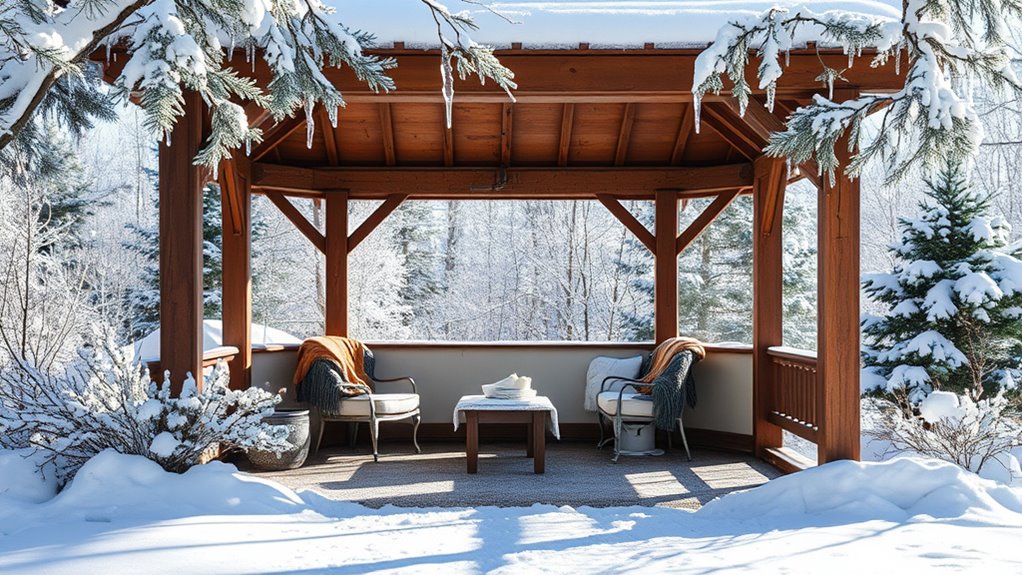
Enclosing your gazebo for winter can feel like transforming it into a luxurious fortress against the elements. It’s not just about aesthetics; it’s about extending your outdoor living space’s usability and comfort. With various enclosure options available, you might find yourself questioning what’s best for your needs. Are the benefits worth the investment? Let’s explore the critical factors that can help you make an informed decision.
Benefits of Enclosing Your Gazebo
Enclosing your gazebo for winter not only extends its usability but also enhances its overall functionality. By adhering to safety regulations, you guarantee a secure environment for storage, protecting your furniture and decor from harsh elements. In addition, seasonal storage becomes streamlined, as enclosed spaces allow for organized and efficient upkeep. This liberation from weather-related concerns gives you peace of mind, enabling you to focus on enjoying your outdoor space year-round. Moreover, an enclosed gazebo can serve as a cozy retreat during chilly months, adding comfort and versatility to your home while maximizing your investment in outdoor living.
Types of Gazebo Enclosures
When considering how to enclose your gazebo for winter, you’ll find several effective options. Mesh screen enclosures offer ventilation while keeping insects out, while solid panel choices provide maximum protection against harsh weather. Additionally, zip-up curtains can be a versatile solution, allowing for easy adjustment based on temperature and privacy needs.
Mesh Screen Options
Choosing the right mesh screen option for your gazebo enclosure can greatly enhance both comfort and functionality during the winter months. High-quality mesh provides exceptional durability, ensuring it withstands harsh weather conditions while maintaining airflow. Look for options that allow easy attachment and removal, offering seasonal versatility. Heavy-duty mesh screens can reduce wind exposure while keeping insects at bay, enabling you to enjoy your space year-round. Additionally, consider UV-resistant materials to protect against sun damage during warmer months. By selecting the right mesh, you’ll create a flexible environment that adapts to your needs while preserving the essence of outdoor living.
Solid Panel Choices
Solid panel choices for gazebo enclosures offer a robust option for winter protection, providing enhanced insulation and privacy. These panels typically feature materials like polycarbonate or fiberglass, known for their solid panel durability and ability to withstand harsh weather. By installing these panels, you create a barrier against cold winds and snow, ensuring your gazebo remains a comfortable retreat. Additionally, solid panel insulation considerably improves heat retention, allowing you to enjoy your space even in frigid temperatures. With various styles and finishes available, you can customize your gazebo while maintaining the freedom to enjoy the outdoors year-round.
Zip-Up Curtains
For those seeking a versatile enclosure option, zip-up curtains are an excellent choice for gazebos, especially during the winter months. These enclosures offer flexibility in usage, allowing you to adjust ventilation and light as needed. Their zip-up features provide easy access and secure closure, while the materials used can enhance insulation and weather resistance.
Consider these key aspects:
- Durability: High-quality zip-up materials resist tearing and fading.
- Customization: Choose colors and patterns that match your style.
- Ease of Use: Simple installation and removal processes for seasonal adjustments.
With zip-up curtains, you can enjoy your gazebo all year round.
Cost Considerations
When enclosing your gazebo for winter, it’s essential to evaluate both material and installation costs alongside long-term maintenance expenses. Different materials can greatly impact your initial investment and future upkeep. By analyzing these financial factors, you can make a more informed decision that balances quality and budget.
Material and Installation Costs
Enclosing your gazebo for winter involves several material and installation costs that can vary greatly based on your choices. You’ll need to assess different material types and installation methods to match your budget and aesthetic preferences. Here are three key considerations:
- Material Types: Options include glass panels, vinyl curtains, and wood frames, each affecting costs differently.
- Installation Methods: DIY installation can save money, while hiring professionals may guarantee a polished finish.
- Labor Costs: Depending on complexity, labor can markedly increase your overall expenses.
Long-Term Maintenance Expenses
Although you may have invested considerably in materials and installation for your gazebo’s winter enclosure, it is essential to factor in long-term maintenance expenses that can arise over time. Regular upkeep can incur significant long-term costs, including repairs from weather damage or wear and tear on your enclosure’s components. To mitigate these expenses, implement effective maintenance strategies such as periodic inspections, cleaning, and sealing. By proactively addressing potential issues, you can extend the lifespan of your gazebo and preserve its aesthetic appeal. Ultimately, understanding these costs allows you to make informed decisions about your gazebo’s winter enclosure and overall longevity.
Maintenance Requirements
To guarantee your gazebo withstands the harsh winter months, you’ll need to adhere to specific maintenance requirements that protect its structure and longevity. Effective winter preparation involves a few essential care tips:
- Inspect and Repair: Check for any damages like cracks or loose fittings and fix them promptly to prevent further issues.
- Clean Thoroughly: Remove debris, leaves, and snow accumulation to avoid mold and structural stress.
- Seal and Protect: Apply a weather-resistant sealant to protect wood surfaces from moisture and extreme temperatures.
Following these guidelines assures your gazebo remains a cherished retreat, even during winter’s chill.
Impact on Aesthetics
The visual appeal of your gazebo can considerably change when winter arrives, particularly if you choose to enclose it for the season. Enclosing your gazebo can enhance its aesthetic appeal, transforming it into a cozy retreat that contrasts beautifully with the stark winter landscape. However, this also alters its visual impact; the once open, airy structure may feel confined. Consider the materials you use—glass panels can maintain transparency while keeping warmth in, whereas solid walls may create a more closed-off sensation. Balance is key; guarantee that your enclosure complements the gazebo’s design, enhancing rather than detracting from its original charm.
Heating Options for Enclosed Gazebos
How can you keep your enclosed gazebo warm and inviting during the winter months? Consider these effective heating options:
- Electric Heaters: These are efficient and easy to control. They can quickly warm the space without the hassle of fuel.
- Portable Fireplaces: Offering a cozy ambiance, portable fireplaces provide both warmth and aesthetic appeal, perfect for gatherings.
- Infrared Heaters: These heat objects directly rather than the air, ensuring an efficient and comfortable warmth without noise.
Alternatives to Full Enclosure
While you might envision a fully enclosed gazebo as the ultimate solution for winter comfort, there are several alternatives worth considering that can still provide protection and warmth without complete enclosure. Flexible barriers, like retractable windbreaks, allow you to customize your space based on changing weather conditions. Additionally, seasonal screens can filter out cold drafts while letting in natural light, enhancing your outdoor experience. These options maintain a sense of openness and freedom, enabling you to enjoy your gazebo without sacrificing comfort. By implementing these alternatives, you can create a cozy atmosphere without the constraints of full enclosure.
Seasonal Use and Versatility
When you consider the seasonal use and versatility of your gazebo, it becomes clear that this outdoor structure can serve multiple functions throughout the year. Its versatile designs allow you to adapt for various seasonal activities, enhancing your outdoor experience. Here are three ways to maximize its use:
- Summer Retreat: Enjoy warm evenings with friends, utilizing the space for barbecues or relaxation.
- Fall Gatherings: Host cozy gatherings with seasonal decorations, embracing the autumn ambiance.
- Winter Wonderland: Transform it into a festive hub for holiday celebrations, utilizing heaters for warmth.
Embracing these options allows you to enjoy your gazebo year-round.
Making the Decision: Key Factors to Consider
As you embrace the versatility of your gazebo throughout the seasons, it’s important to weigh several key factors before deciding to enclose it for winter use. First, assess your local climate conditions; extreme cold or heavy snowfall may necessitate protection. Next, consider your usage frequency—if you plan to use the gazebo often during winter, enclosing it could enhance comfort and usability. Additionally, evaluate the potential costs of materials and maintenance against the benefits of increased functionality. Ultimately, balancing these factors will help you make an informed decision that aligns with your lifestyle and desire for outdoor freedom.
Frequently Asked Questions
Can I Use My Gazebo During Winter Without Enclosing It?
Yes, you can use your gazebo during winter without enclosing it, but be mindful of gazebo maintenance. Snow and ice accumulation may cause damage, so make certain regular inspections and clear debris to maintain its integrity.
How Long Does It Take to Install a Gazebo Enclosure?
Installing a gazebo enclosure can feel like watching paint dry, but typically, it takes one to two days depending on your enclosure options and the installation timeline. Proper planning guarantees you’ll enjoy your space quickly.
What Materials Are Best for Gazebo Enclosures?
For gazebo enclosures, consider durable screen materials like fiberglass or aluminum for ventilation, alongside insulation options such as foam panels or thermal curtains. These choices balance comfort and freedom while protecting against winter elements effectively.
Will Enclosing My Gazebo Increase My Property Value?
Enclosing your gazebo is like adding a diamond to your property’s crown. It can enhance property appraisal, providing investment benefits. A well-designed enclosure not only adds beauty but can also considerably boost your home’s overall value.
Can I DIY My Gazebo Enclosure Project?
Yes, you can DIY your gazebo enclosure project. Utilize DIY tips for effective assembly, and explore various enclosure designs that suit your style. This allows for creativity while ensuring functionality and comfort throughout the winter months.