
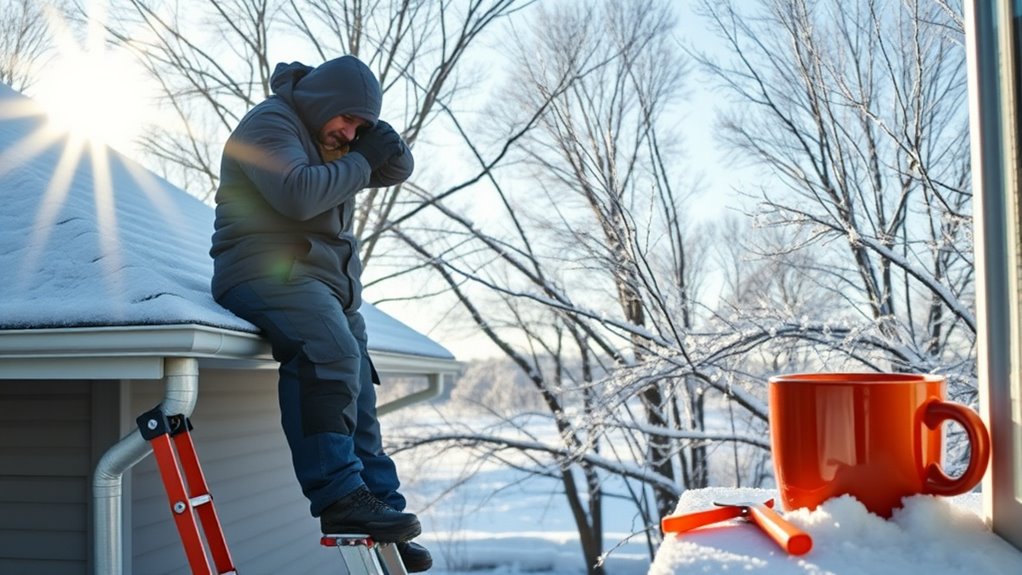
As winter approaches, your home’s gutters become the first line of defense against nature’s icy grasp. Installing a reliable gutter system is crucial to prevent damage from melting snow and ice. You’ll need to assess your roof’s needs and choose the right materials for cold weather. But there’s more to it than just installation; understanding the nuances can save you from costly repairs down the road. Want to guarantee your home is well-protected this winter?
Understanding the Importance of Gutters in Winter
When winter arrives, you might not think about your gutters, but they play an essential role in protecting your home. Understanding gutter functionality is key during this season; they direct melting snow and rain away from your foundation. If your gutters aren’t clear, you risk ice dam formation, leading to potential leaks and costly repairs. Proper winter drainage is vital for maintaining a dry and safe environment. Make certain your gutters are clean and well-maintained to guarantee they effectively channel water away from your home. Investing time in your gutters now can save you headaches later.
Choosing the Right Gutter Material for Cold Weather
When choosing gutter materials for cold weather, it’s crucial to evaluate their durability and resistance to harsh conditions. Aluminum and steel gutters each have their pros and cons, while vinyl can offer a lightweight, budget-friendly option. Understanding these differences will help you make the best choice for your home this winter.
Aluminum vs. Steel Gutters
Choosing the right gutter material for cold weather can make a significant difference in your home’s protection against winter elements. Aluminum gutters offer several advantages, including lightweight construction and resistance to rust, which can be beneficial in harsh conditions. They’re also easier to install, saving you time and effort. On the other hand, steel gutters are known for their durability, making them a robust choice against heavy snow and ice. However, they may require more maintenance due to rust susceptibility. Ultimately, consider your specific needs and preferences to select the gutter material that best suits your winter weather challenges.
Vinyl Durability in Cold
While vinyl gutters are often praised for their affordability and low maintenance, their performance in cold weather can be a concern. In cold temperatures, vinyl can become brittle, leading to cracks or breaks. However, advancements in vinyl resilience have improved their ability to withstand winter’s harsh conditions. If you’re considering vinyl, opt for high-quality options designed for colder climates. These products are engineered to endure freezing temperatures and resist damage. Remember, proper installation is also essential; guarantee your gutters are securely fastened to prevent sagging or detachment during snow or ice buildup. Choose wisely, and enjoy your freedom from gutter worries!
Assessing Your Home’s Gutter Needs
Before you can install an effective gutter system for winter, you need to assess your home’s specific needs. Start by evaluating your roof’s size and pitch, as these factors influence the appropriate gutter size. Larger roofs may require wider gutters to handle increased water flow. Next, consider seasonal considerations like snow and ice accumulation, which can strain your gutters. Check for existing issues, such as blockages or leaks, which might need addressing before winter arrives. By understanding your unique situation, you’ll guarantee your gutter system functions efficiently, protecting your home from water damage during harsh winter months.
Tools and Materials Needed for Installation
To successfully install a gutter system for winter, you’ll need a few essential tools and materials. Start with winter tools like a sturdy ladder, safety goggles, and gloves to protect yourself. You’ll also need a power drill, measuring tape, and level for precise installation. Gather materials such as gutters, downspouts, brackets, and sealant to guarantee a strong and weather-resistant system. Don’t forget about a rivet gun and screws to secure the gutters in place. With the right tools, your gutter installation can be efficient, giving you peace of mind as winter weather approaches. Prepare now, and enjoy the freedom of a functional gutter system!
Step-by-Step Guide to Installing Gutters
Installing gutters can seem intimidating, but with a clear step-by-step guide, you can tackle the task with confidence. Follow these simple steps for effective gutter installation as part of your winter preparation:
- Measure the roofline accurately.
- Cut the gutters to the required lengths.
- Secure the hangers to the fascia.
- Attach the gutters, ensuring a snug fit.
Once you’ve completed these steps, check for any leaks and make adjustments as needed. With a little patience and these guidelines, you’ll have a reliable gutter system ready to handle winter’s challenges, allowing you to focus on enjoying your freedom.
Ensuring Proper Gutter Slope and Drainage
While you may have successfully installed the gutters, ensuring proper slope and drainage is essential for their effectiveness. The gutter pitch should ideally be about a quarter-inch for every ten feet of length. This slight incline allows water to flow freely toward downspouts, enhancing drainage efficiency. If your gutters are flat or sloped incorrectly, you risk water pooling, which can lead to ice buildup in winter. Regularly check for debris that might obstruct flow, and adjust the pitch as needed. With the right slope, your gutter system will function properly, keeping your home safe and dry throughout the winter months.
Installing Gutter Guards to Prevent Ice Buildup
A properly sloped gutter system is just the beginning of preventing winter-related issues. Installing gutter guards is essential for effective ice dam prevention. They help keep debris out, ensuring water flows freely and doesn’t freeze. Here are some popular gutter guard types to evaluate:
Prevent winter woes by installing gutter guards to keep debris out and ensure smooth water flow.
- Mesh guards: Allow water through while blocking debris.
- Reverse curve guards: Direct water into the gutter and deflect leaves.
- Foam inserts: Fit snugly inside gutters to filter rainwater.
- Screen guards: Simple to install and effective against large debris.
With the right gutter guards, you’ll enjoy peace of mind and a hassle-free winter!
Regular Maintenance Tips for Winter Readiness
To guarantee your gutter system is ready for winter, regular maintenance is essential. Start with gutter cleaning to remove leaves and debris, preventing clogs that can lead to ice damming. Inspect your gutters for any damage or loose sections; repair them promptly to ascertain proper water flow. Check downspouts to confirm they’re directing water away from your foundation. As winter approaches, consider adding insulation to prevent heat loss from your roof, which can contribute to ice buildup. Don’t forget to monitor your gutters throughout the season, clearing them as needed to maintain peak performance and protect your home.
Common Mistakes to Avoid During Installation
One of the most common mistakes people make during gutter installation is neglecting proper slope. Without the right angle, water won’t drain efficiently, leading to backups and potential damage. Here are some pitfalls to watch out for:
- Gutter alignment errors that prevent smooth water flow
- Improper sealant application, leading to leaks
- Skipping downspout placement considerations
- Ignoring local weather conditions, which can affect performance
Frequently Asked Questions
How Do I Know When to Replace My Gutters?
You’ll know it’s time to replace your gutters when you see rust, cracks, or sagging. Generally, gutters last 20-30 years, so keep an eye out for these replacement signs to maintain your home’s protection.
Can I Install Gutters During Winter?
Yes, you can install gutters during winter. Curiously, about 30% of homeowners choose winter for gutter installation. Just remember to take into account weather conditions, ensuring safety and proper sealing for long-lasting performance.
What Are the Signs of Clogged Gutters?
You’ll notice signs of overflow like water spilling over the edges or pooling around your foundation. For effective gutter maintenance tips, regularly inspect for debris buildup, ensuring your gutters function properly and protect your home.
Do Gutter Systems Come With Warranties?
Yes, many gutter systems come with warranty coverage. When exploring installation options, check the warranty details carefully. It can vary by manufacturer and may cover defects or installation issues, ensuring peace of mind for your investment.
How Can I Improve My Gutter’s Efficiency?
To improve your gutter’s efficiency, prioritize regular gutter maintenance, like cleaning debris and checking for blockages. This guarantees efficient drainage, preventing water damage and extending your system’s lifespan, giving you peace of mind during heavy rains.